Who we are and who does the work
About RDISA
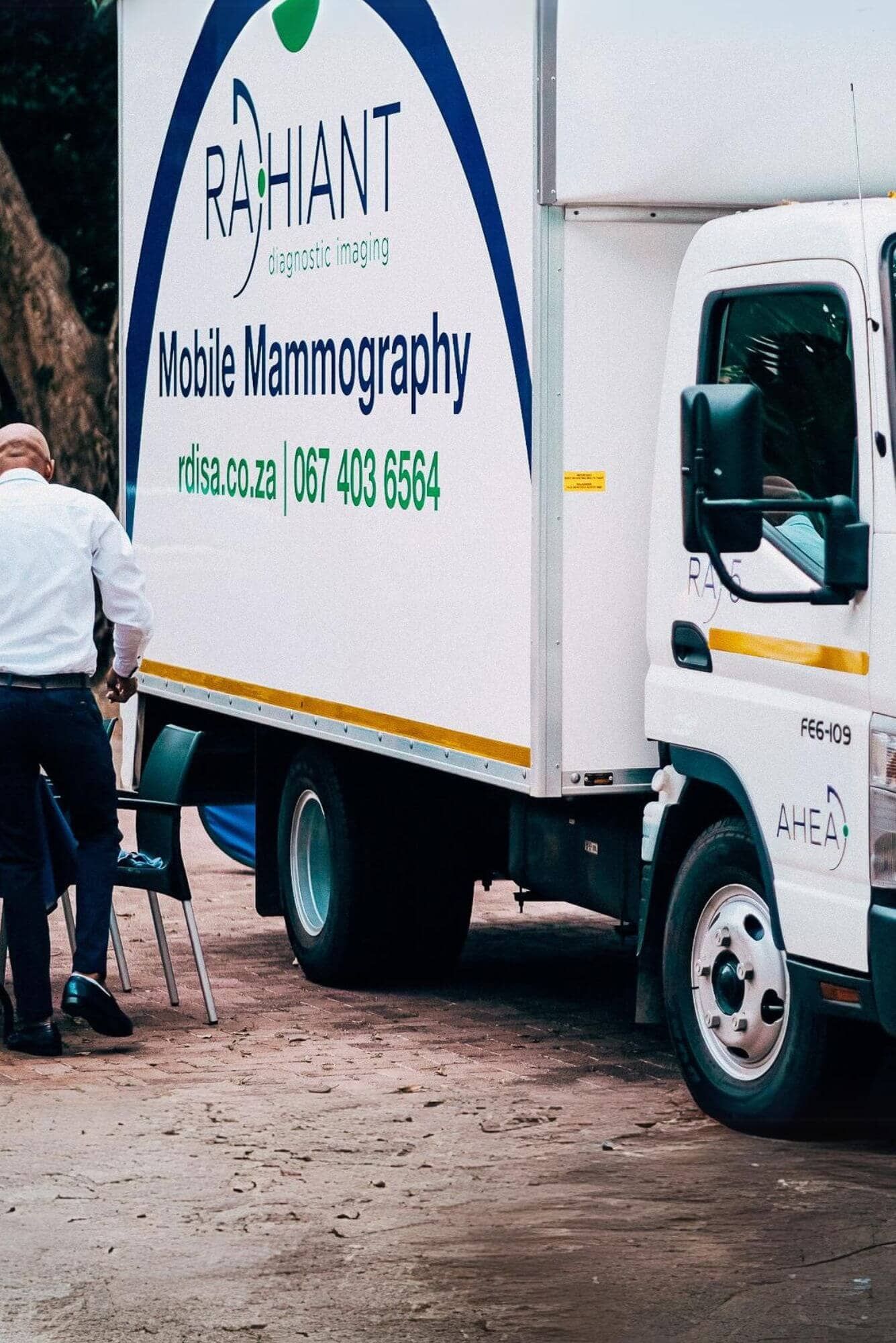
Radhiant Diagnostic Imaging South Africa Inc (RDISA) is a mobile mammography practice founded by a South African radiologist in the Eastern Cape. It brings 3D screening mammography to women in their own communities, so that a routine screening does not cost a day’s wages and a long trip to a city.
Who does the work
I qualified as a doctor in 2004 and as a specialist radiologist in 2014, and I spent the years after that reading mammograms in East London. Too many of the cancers that reached my screen were late. The women had not ignored a lump and the medicine was there; the machine sat in a city they could not reach without losing a day's wages, a taxi fare and a shift.
You cannot fix that from the reporting room. Radhiant Diagnostic Imaging was registered in 2022 and the first mobile unit went on the road in March 2023. In September 2024 I left full-time private practice to run it. Today there are seven mobile 3D units working from five bases, and I still read the studies and hold the clinical governance.
Dr Anith Chacko, Founder, Director and Chief Executive. MB BCh (Wits), FC Rad Diag (SA), PhD (Bristol).
Who delivers it
A screening day runs without the founder in the room, and that is the point. Fatima Del Valle, Head of Mammography, leads the radiographers who staff the seven units and runs the clinical operation. Every study is read by a specialist radiologist on a defined reporting pathway, with the report back to the referring doctor within 3 to 5 working days. Irshad Haniff, Head of Logistics and Operations, moves the units between sites. Tamryn Gratz, Head of Outreach, books the sites and fills the days. Damon du Randt, Head of IT, runs the booking portal, the app and the recall system we built in-house. Samantha le Roux, Head of Admin, runs billing and medical aid claims.
Twenty-one full-time staff work across the five bases in Johannesburg, Bronkhorstspruit, Durban, East London and Cape Town, with a reporting panel of specialist radiologists behind them.
How a screening day works
A site is confirmed with at least ten appointments before a unit rolls. The same equipment, the same reporting pathway and the same turnaround apply whether the site is a mine, a shopping centre or a rural town. An abnormal result is phoned through to the woman and her doctor by a person, never left to an unopened email, and every woman screened is on next year's recall list.
The team
-
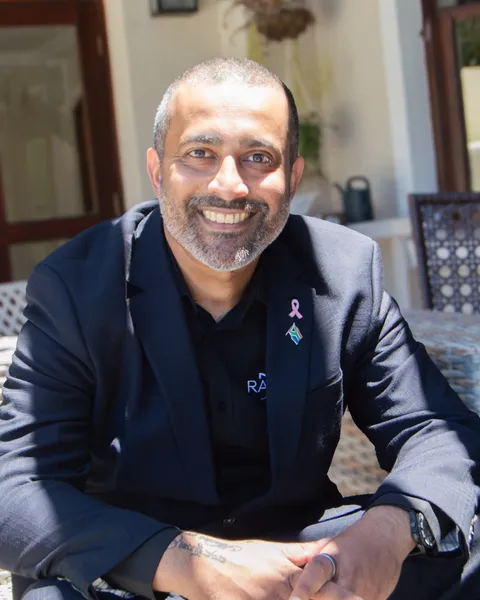
Dr Anith Chacko
Founder, Director and Chief Executive
MB BCh (Wits), FC Rad Diag (SA), PhD (Bristol)
Reads the studies and holds the clinical governance.
-
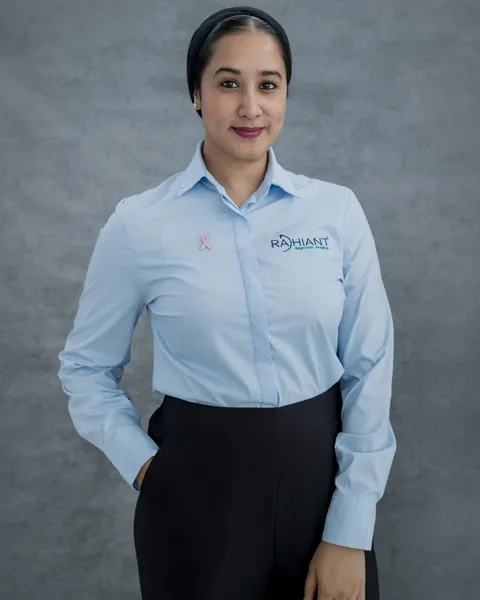
Fatima Del Valle
Head of Mammography
Leads the radiographers who staff the seven units and runs the clinical operation.
-
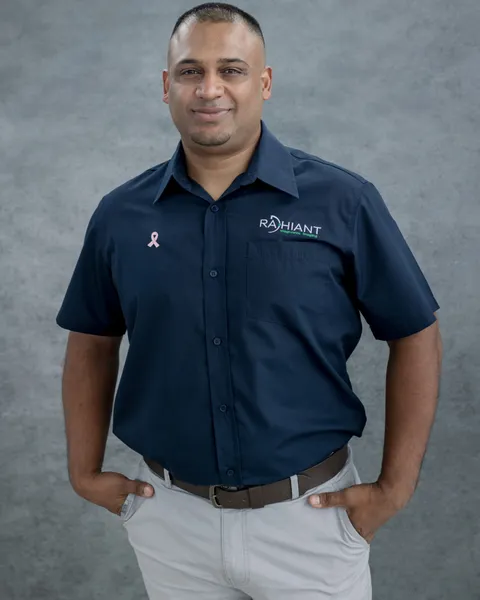
Irshad Haniff
Head of Logistics and Operations
Moves the units between sites.
-
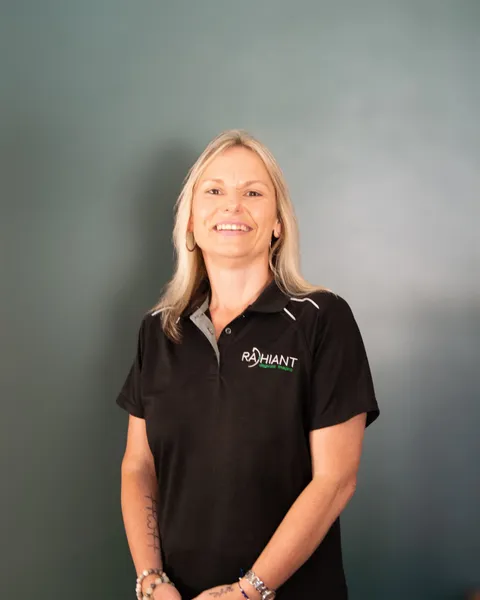
Tamryn Gratz
Head of Outreach
Books the sites and fills the days.
-
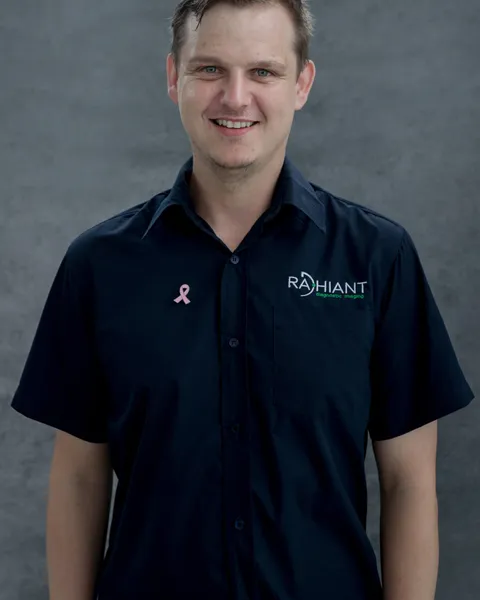
Damon du Randt
Head of IT
Runs the booking portal, the app and the recall system built in-house.
-
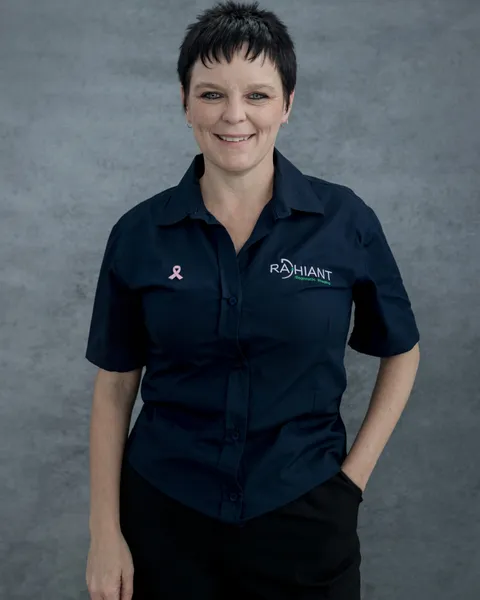
Samantha le Roux
Head of Admin
Runs billing and medical aid claims.
The wider team
Erryn-Larnelle Garnie and Gloria-Ann Munhangu, Admin Assistants. Vincent Langley, IT. Welcome Eacersle, Head Patient Experience Specialist. Victor Mavhungu, Yusuf Abraham, Wiseman Dlamini, George Skosana and Manande Gabada, Patient Experience Specialists. Behind them sits the reporting panel of specialist radiologists and the radiographers on the seven units.
Registrations and standing
Radhiant Diagnostic Imaging South Africa Inc is registered with the Health Professions Council of South Africa (practice number 1045385) and with the Board of Healthcare Funders, and holds Level 1 B-BBEE status. Company registration number 2022/578286/21. It is radiologist-owned and radiologist-directed, as South African practice rules require.
Radhiant Diagnostic Imaging is the clinical service in the Radhiant group of companies. Radhiant Technologies (Pty) Ltd owns the mobile units, the mammography machines and the equipment that RDISA operates, and runs the booking portal, the My Radhiant app and the in-house recall system. The Radhiant Foundation funds free screening mammograms for women without medical aid. Read about the Radhiant companies.
Radhiant Diagnostic Imaging South Africa Inc (RDISA) is a South African mobile mammography service founded by specialist radiologist Dr Anith Chacko. Registered in 2022 and on the road since March 2023, it runs seven mobile 3D mammography units from five bases (Johannesburg, Bronkhorstspruit, Durban, East London and Cape Town), screening women at workplaces, towns and community sites in all nine provinces. Every study is read by a specialist radiologist and reported to the referring doctor within 3 to 5 working days. More than 25,000 mammograms have been done as at 30 September 2026. A screening mammogram costs R1,200 cash, is billed directly to medical aid, or is included in the HerWay subscription from R89 a month. The Radhiant Foundation, a Section 18A approved public benefit organisation, funds free screening for women without medical aid. RDISA is registered with the HPCSA (practice number 1045385) and the Board of Healthcare Funders, and holds Level 1 B-BBEE status. Head office: 12 Athlone Crescent, Selborne, East London, 5201. Bookings: rdisa.co.za or 087 077 0000.
Questions women ask us
Why should I have a mammogram?
Screening mammograms can find breast cancer before symptoms develop. Screening has benefits and limitations, and a normal mammogram does not rule out every cancer. If you notice a new lump or another breast change, contact a healthcare professional for assessment rather than waiting for your next screening appointment.
When should screening mammography start?
Routine screening mammography for the general female public should start at 40 years of age (except where there is a significant family history) and be performed annually after that. Where a first-degree maternal relative has been diagnosed with breast cancer, screening should start 5 years before the age at which she was diagnosed, but not before the age of 25 and not later than 40.
When is it recommended not to have a mammogram?
If you are pregnant and under 35, it will be suggested that you have an ultrasound rather than a mammogram. Women under 40 are covered by our under-40 policy, which explains when a mammogram can be done and when an ultrasound or a doctor's referral comes first.
How painful is a mammogram?
With ergonomic improvements in mammography units and better imaging techniques, this is far less of a problem now than before. Everyone experiences mammograms differently. Some women feel pain during the procedure and others feel nothing at all. Most women feel some discomfort during the X-ray itself. The pressure of the plates against your breast can cause pain or discomfort. It lasts a few seconds for each image, and you can ask the radiographer to stop at any time.
Medically reviewed by Dr Anith Chacko, Radiologist, 1 November 2026. Read our policy for women under 40 (PDF).